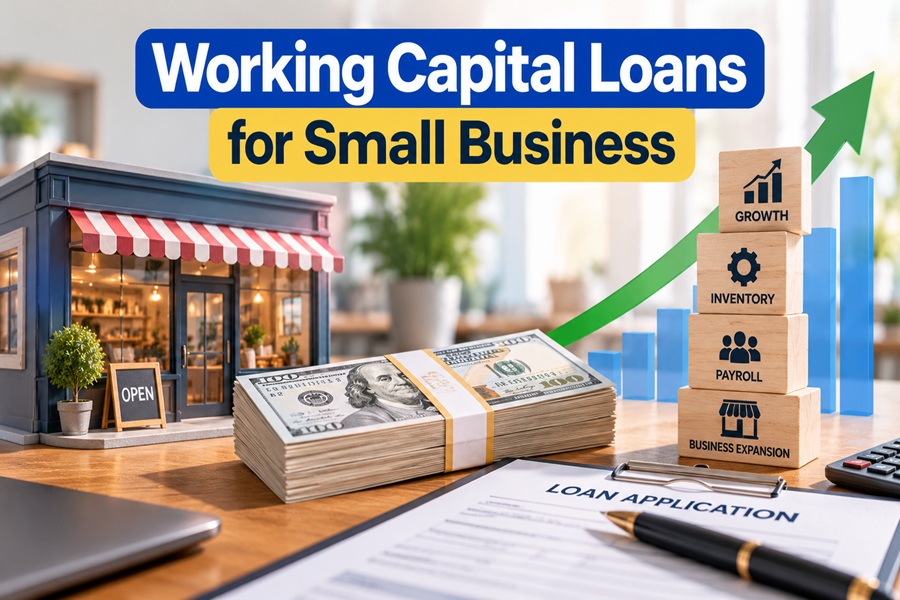
Every April, a landscaping company owner in Ohio faces the same squeeze. Mowers need servicing, mulch has to be bought in bulk and five new seasonal workers start on payroll. The first big checks from commercial clients will not arrive until June. The business is healthy. The calendar is the problem.
That gap between spending and getting paid is exactly what a working capital loan is built for. It is short term financing that covers everyday operating costs such as payroll, inventory, rent and supplies. It is not meant for buying a building or a decade of equipment. It keeps the lights on and the shelves stocked while revenue catches up.
Signs You Might Actually Need One
Borrowing for operations makes sense in a few specific situations:
- Seasonal swings. Retailers before the holidays, landscapers in spring, tax preparers in January.
- Slow paying customers. You invoice on net 30 or net 60 terms but pay your own suppliers sooner.
- A large order or contract. You need to buy materials and hire help before the customer pays.
- A supplier discount. Paying early or buying in bulk saves more than the cost of borrowing.
- A short, predictable dip. Construction delays or a temporary loss of a key client.
It is a weaker choice when the business is losing money every month. Borrowing to cover ongoing losses only delays a harder conversation.
The Main Options Side by Side
Working capital financing comes in many shapes. The right one depends on how fast you need money, how strong your credit is and how predictable your cash flow looks.
| Option | Typical size | Speed | Cost level | Best for |
|---|---|---|---|---|
| Business line of credit | $10,000 to $500,000+ | Days to weeks | Low to moderate | Recurring, unpredictable gaps |
| Short term bank loan | $25,000 to $500,000 | Weeks | Low to moderate | One known expense |
| SBA 7(a) or SBA Express | Up to $5 million (Express up to $500,000) | Weeks to months | Low | Established businesses with good records |
| SBA 7(a) Working Capital Pilot | Lines of credit up to $5 million | Weeks | Low | Manufacturers, contractors, order based businesses |
| Invoice factoring or financing | Based on unpaid invoices | Days | Moderate to high | B2B firms with slow paying clients |
| Inventory financing | Based on stock value | Weeks | Moderate | Retailers and wholesalers |
| Merchant cash advance | Based on card sales | Hours to days | Very high | Emergencies only |
| Business credit card | Usually under $50,000 | Immediate | High if balance carried | Small, short purchases |
The SBA Working Capital Pilot Deserves a Closer Look
Many owners know the standard SBA 7(a) loan. Fewer know about its newer cousin, the 7(a) Working Capital Pilot, or WCP. It launched in August 2024 and offers monitored lines of credit inside the 7(a) program.
It comes in two flavors. The asset based version lets a business borrow against receivables and inventory, often tracked through a borrowing base certificate. The transaction based version funds a specific order or project, covering costs before the job is finished or the product ships.
Key features worth knowing:
- SBA guarantees 85% of lines up to $150,000 and 75% of larger lines.
- Lines can run up to $5 million with terms of up to 60 months.
- Businesses generally need at least 12 months of operating history.
- Not every SBA lender can offer it. Lenders need a specific WCP designation, so ask before applying.
In February 2026, the SBA reported that WCP had produced more than $150 million in new lending since launch, driven largely by small manufacturers. In March 2026, the agency also highlighted project based lines of credit through the program for small homebuilders. If you build, manufacture or fulfill large contracts, it is worth asking your bank about it.
The Expensive End of the Market
Speed has a price. Merchant cash advances deserve special caution. Instead of an interest rate, they use a “factor rate,” such as 1.3. Borrow $50,000 and you repay $65,000, often through daily or weekly withdrawals from your card sales or bank account. Because repayment happens over a few months, the effective annual cost can be extremely high.
Invoice factoring sits in the middle. A factoring company buys your unpaid invoices at a discount, advancing perhaps 80% to 90% of their value right away. It can be a reasonable tool for a B2B business with reliable clients who simply pay slowly, but the fees add up if invoices sit for 60 or 90 days.
Always convert offers into an annual percentage rate before comparing them. A “small” weekly fee can hide a triple digit APR.
What Lenders Look At
Traditional lenders and the SBA generally review:
- Time in business, often at least one to two years
- Annual revenue and consistency of deposits
- Personal and business credit scores
- Cash flow, often measured as the debt service coverage ratio
- Collateral such as receivables, inventory or equipment
- Personal guarantees from owners holding a significant stake
The SBA has also tightened some underwriting and eligibility rules in recent years, so it pays to ask a lender which current requirements apply before you gather documents.
Online lenders tend to approve faster with looser requirements, often looking at a few months of bank statements. The trade off is almost always a higher cost.
How to Prepare a Strong Application
A little preparation can shave weeks off the process and lower your rate.
- Know your number. Calculate exactly how much you need and for how long, using a simple cash flow forecast.
- Clean up your books. Have recent profit and loss statements, a balance sheet and tax returns ready.
- Pull an accounts receivable aging report. Lenders want to see who owes you and how late they are.
- Explain the use of funds. “Buy holiday inventory that historically sells through by December” is far more convincing than “general expenses.”
- Apply before the crunch. A line of credit is easiest to get when you do not urgently need it.
Using the Money Well
The healthiest working capital loans pay for themselves. Inventory bought with borrowed funds should sell at a margin that covers the interest. Payroll covered during a slow month should be tied to revenue that is clearly on the way.
Set a repayment plan before you draw a dollar. With a line of credit, aim to bring the balance back toward zero at least once a year. Many banks expect that “clean up” period, and it proves the line is funding timing gaps rather than a deeper problem.
Back in Ohio, the landscaper who opens a modest credit line in winter and draws it only from April to June ends up paying a few hundred dollars in interest. The one who waits until payroll bounces ends up with a cash advance and a much bigger bill. The loan itself is the same idea. The timing and the type make all the difference.
Leave a Reply