The Paper Behind the Parcel: What an Invoice for an Online Order Really Does
Tags: what is an invoice for an online order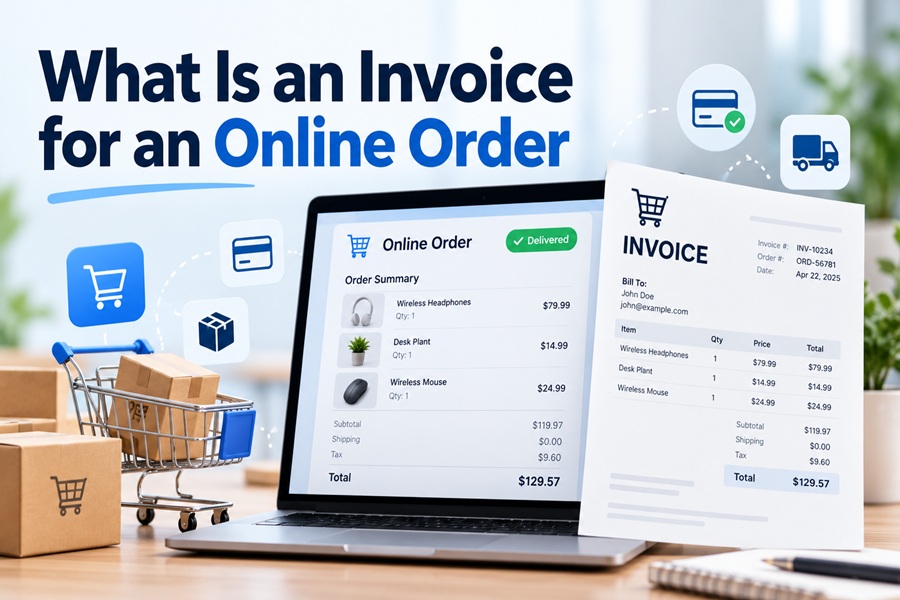
You order a pair of shoes at midnight. A confirmation email lands within seconds, a slip drops out of the box a few days later, and three weeks on, your accountant asks for “the invoice.” That is three documents for one purchase, and most people use the words as if they mean the same thing. They do not, and the difference matters the moment money, tax or a return is involved.
The Plain Meaning
An invoice for an online order is a formal, numbered document issued by the seller. It lists what was bought, the price of each item, any tax, shipping and discounts, who the buyer is, who the seller is, and how payment is handled. At its core, it is a request for payment, even in cases where the payment has already been collected at checkout.
That last point is where confusion starts. When you pay by card on a shop’s website, the store usually sends a receipt style confirmation, which is proof that money arrived. A formal invoice tends to appear in other situations: the buyer is a business, the buyer asks for one, payment is due later, or local tax rules require it.
Four Documents That Get Mixed Up
Every online order can produce several pieces of paper. Here is how they differ.
| Document | Who sends it and when | What it tells you |
|---|---|---|
| Order confirmation | Instantly after checkout | The store has received your order |
| Invoice | At checkout, at dispatch, or on request | The amount owed or charged, with tax and terms |
| Receipt | After payment is received | Proof that you have paid |
| Packing slip | Inside the parcel | Which items are in the box, usually without prices |
A single email can sometimes do two jobs. A document titled “Receipt” that carries every required field may satisfy a tax authority, while one titled “Invoice” that leaves out the buyer’s tax number may not. The label matters less than the content.
What a Proper Invoice Carries
A complete invoice for an online order usually has these elements:
- A unique invoice number that follows a running sequence
- The date the invoice was issued
- The seller’s legal name, address and tax registration number where applicable
- The buyer’s name and billing address, plus a tax number for business purchases
- A line for each item with description, quantity and unit price
- Shipping charges, discounts and any coupon applied
- The tax rate and tax amount, shown separately from the base price
- The total payable and the currency used
- Payment terms, due date and the method of payment
- The order number, so the invoice can be matched to the purchase
The running number is not decoration. It lets a seller prove nothing has gone missing and lets an auditor follow the trail. If invoice numbers skip or repeat, questions follow.
When You Actually Need One
For a casual purchase, a receipt is often enough. An invoice becomes important in a handful of situations:
- You are buying for a business. Many tax systems, including GST and VAT regimes, let a registered business claim back the tax it paid, but only with a valid tax invoice in its name.
- You are claiming reimbursement. Employers commonly ask for an itemised invoice before refunding a work expense.
- You need warranty or after sales support. A dated invoice with the model and price is strong proof of purchase.
- You are returning or disputing an order. Refund teams match the invoice against their records.
- You are importing goods. Cross border parcels often need a commercial invoice so customs can assess duty.
- The order is large or custom. Wholesale and made to order jobs often come with payment terms, such as a deposit up front and the balance after delivery.
If none of these apply, keeping the receipt is usually plenty.
What Sellers Should Build Into the Process
Running an online store without a clear invoicing routine turns into a headache around tax time. A few habits help.
Start with a consistent number series and never reuse a number. Most store platforms and accounting tools can generate invoices automatically from each order, which removes manual typing and the mistakes that come with it.
Always include the order reference so customers and accountants can trace each invoice to a purchase. When a marketplace or payment processor is involved, copy its order ID onto the invoice too.
If a mistake slips through, do not quietly edit a sent invoice. Issue a credit note that cancels or adjusts it, then send a corrected one. This keeps your records clean and your paper trail honest.
Finally, keep an eye on the rules. A growing number of countries now require structured electronic invoices, particularly for business to business sales. A seller who enters a new market inherits that format along with the customers.
What Buyers Can Do
If you need an invoice, ask early. Many stores let you add a company name and tax number at checkout, and that is far easier than requesting a correction weeks later. Before you place the order, check that the spelling of your name, your address and your tax number are right, because a wrong detail can make the invoice useless for a claim.
After the order, download the invoice from your account or email and store it somewhere safe. A simple folder organised by month is enough for most people. Returns, warranty claims and tax filing all become easier when documents are within reach.
A Quick Way to Think About It
If you want a memory trick, think of the three stages of a purchase. The order confirmation says “we have your order.” The invoice says “here is what it costs and how it is billed.” The receipt says “thank you, this is paid.” On a tiny online sale all three can collapse into one email. On a business order they stay separate, and each one has a job.
The Takeaway
An invoice for an online order is more than a bill. It is the record that links a seller’s books to a buyer’s books, supports tax claims, and settles arguments before they begin. Sellers who number it properly and buyers who ask for the right details at checkout save themselves time, money and a good deal of frustration down the line.